
Water Storage Solutions:
Municipal Backup
Tired of water cuts and Low pressure? Then This system is for you. A JoJo Tank Municipal Water Backup Solution consists of a tank that is tied to the main water supply line and fills automatically when mains water is available.
This water can then be used in the event that the Municipal water system fails or is shut down for maintenance or repairs, providing you with an uninterrupted water usage , pressured water feed that is clean and safe for household use and consumption. A Municipal Water Backup Solution, is the way yo go.
From R11500 Fully Installed

Municipal Backup Benefits
Uninterrupted water supply
Tank filled with municipal water
Pump water from tank back into home
Pressure sensor starts and stops pump operation
**Water is normally fit for consumption, but this may vary based on the quality
of your water. If unsure, rather opt for a water filter.
System Components
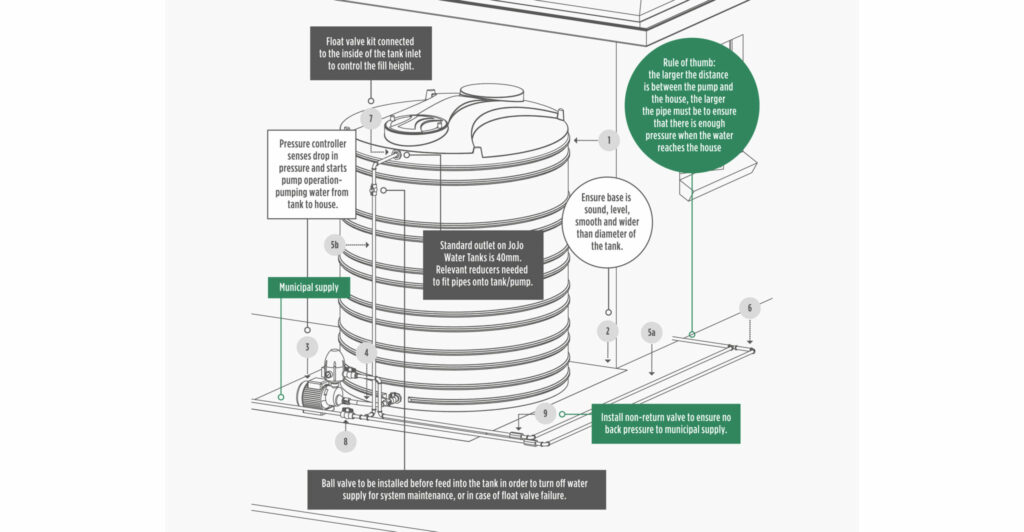
1. Water tank
2. Base / foundation
3. Pump and pump cover
When choosing a water pump, it is important to consider the water source, the application and the pressure required to ensure that the pump will meet your requirements. To ensure all connections are visible, a pump cover was not included in this illustration, but we do recommend using a pump cover to protect your pump from the elements.
4. Pump to tank connector kit
An all-inclusive kit that permits seamless connection from the tank to both our 0.37kW and 0.75kW Booster Pumps.
5. Pipes
Assumed ¾-inch galvanised pipes
5a. 25 mm diameter – from pump to house, to tie into mains.
5b. Supply tank with municipal feed to float valve at the top of tank.
6. Elbows
Sizes according to pipes and quantity according to installation/setup.
7. Float Valve Kit
Allows for effortless filling of a JoJo tank with an automatic shut-off. This can be manually done with a hose, or for a more permanent solution (like the one in our illustration), you can connect it to your plumbing line.
8. Ball valve/s
To isolate components and better manage the system.
Note: it is advised to use these between your municipal feed and your tank, your tank and your pump, as well as your pump and the feed into your house.
9. Non-return valves
To ensure no back pressure to the main supply.
10. Electrical connection to pump
Filtration
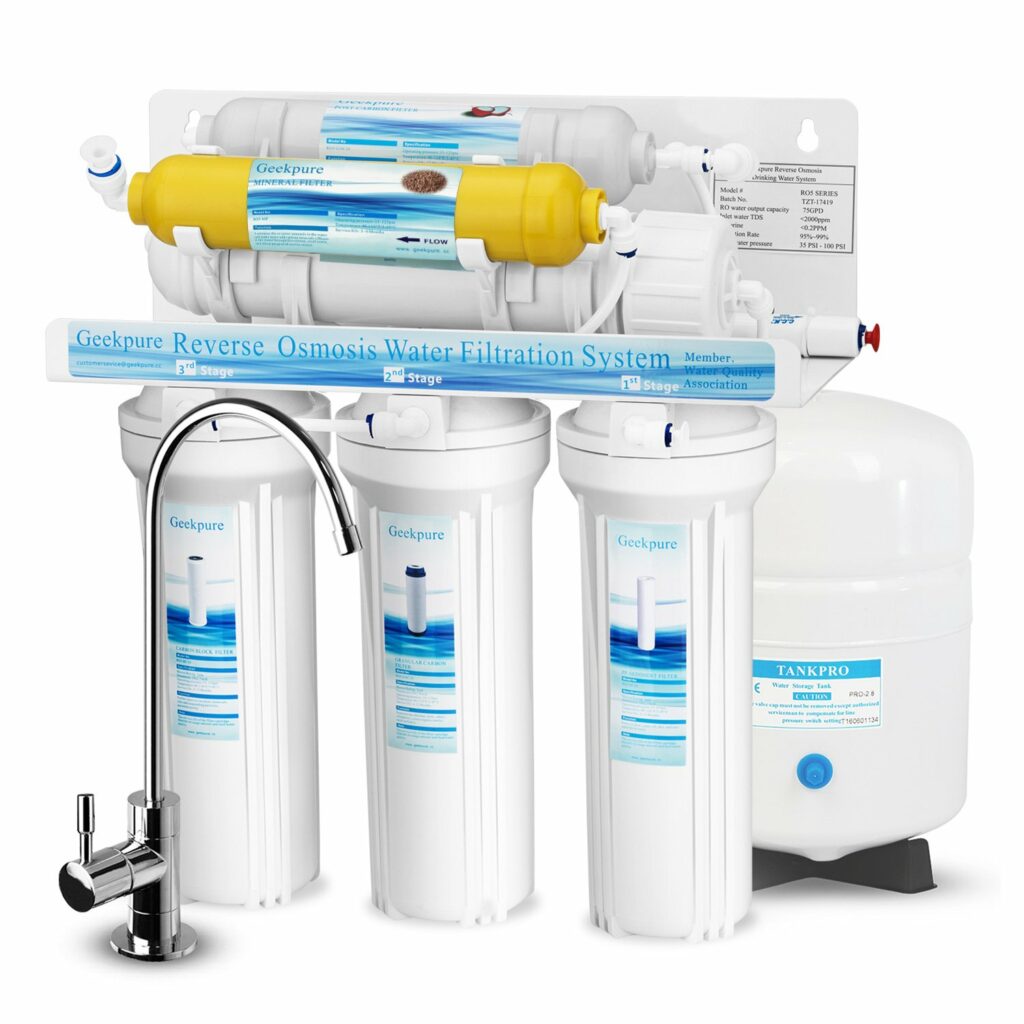
Option 1 – Undersink or a Revers osmosis water filter system (placed inside at one tap for drinking purposes).
Option 2 – Whole-house Filter (placed outside to filter all the water used in your house).
Treated municipal water is adequate for household use, but can require additional filtration depending on the quality. If you are unsure of the quality of water, we advise using a filter to remove any potentially harmful contaminants before using the water for drinking or cooking.
Maintenance
Here are two tips to prolong your system’s life, reduce the potential for damages and ensure you enjoy maximum benefits:
1. Keep your tank clean
Inspect the inside of the tank every 3 months to make sure that everything is in order. If it is not clean, identify the cause of the problem – your lid might be loose or an overflow pipe might not be covered correctly.
2. Rotate the water
Under ideal circumstances, municipal water can be stored inside a JoJo tank for extended periods of time due to the fact that it is chlorinated. To keep your water fresh, however, it is recommended to rotate the water every two weeks.
Tip: Draw up a roster for your tank and rotate/circulate the water at set intervals by using it to wash your car, fill up the pool, water the garden etc. This will get the water level down inside your tank, after which you can fill it up with fresh municipal water.
Pre-Installation guide
1. Choose a tank
How to estimate what size tank would be sufficient for municipal backup:
Size of tank = litres p/day X total days backup required i.e. 4 x people (600L) X 3 days = 1800L
| PEOPLE | LITRES P/DAY |
|---|---|
| 1 | 150 |
| 2 | 300 |
| 3 | 450 |
| 4 | 600 |
| 5 | 750 |
2. Tank Placement
Should be placed where municipal supply can be intercepted, before entering the house.
3. Base/foundation options
Tanks must be installed on a sound, level and smooth surface. Level paving will suffice, or a properly designed tank stand. Alternatively a concrete slab needs to be built, ideally with a concrete surface bed at least 85mm thick.